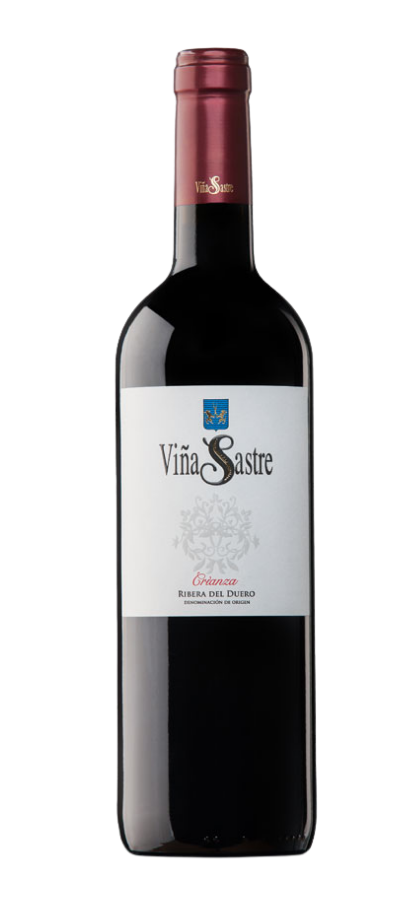
Vina Sastre Crianza Ribera del Duero 2020

SKU: SPCABSHWIRE375020 Category:
Tempranillo | Catillia y Leon | Spain | Red Wine | Bodegas Vina Sastre | 2020 | 0,75 L | 14 %

Sommelier recommends

“The nose reveals aromas of fresh dark cherry, plum, rich earthy nuances, vanilla, and a hint of smoke. On the palate, the wine is intense, fruit-driven, and juicy, offering flavours of dark cherry and dried spices. The finish is long and persistent, supported by firm, chalky tannins.” — Ronalds Pētersons, Sommelier at Noble Wine

1 in stock

35.00 

  • Delivery in Riga — 5. - 6. August
  • Venipak courier — 6. - 7. August
  • Free in-store pickup — 5. - 5. August

Wine Searcher review

91/100

Viña Sastre Crianza Ribera del Duero 2020 is an expressive red wine crafted predominantly from Tempranillo (Tinto Fino) grown in high-altitude vineyards within the Ribera del Duero appellation. Old vines, limestone and clay soils, and significant diurnal temperature variation contribute to exceptional fruit concentration, freshness, and aromatic complexity. Following traditional fermentation, the wine is matured for approximately 14 months in a combination of French and American oak barrels, followed by additional bottle ageing. The 2020 vintage displays the classic character of Ribera del Duero, combining concentrated dark fruit, beautifully integrated oak, and an impressive balance between power and elegance.

Part of the Viña Sastre estate are three high-class vineyards in the province of Burgos. The Sastre family, who have owned these vineyards for three generations, have deep roots in the region and respect the land - they have always worked on the land. Sastre Winery works according to the principles of biological and biodynamic agriculture. In addition to biological methods in the vineyards, Viña Sastre also uses natural methods of wine production.

The nose reveals aromas of ripe blackberry, black cherry, and plum, layered with vanilla, cocoa, sweet spices, tobacco, and subtle Mediterranean herbs. On the palate, the wine is full-bodied, juicy, and harmoniously structured, with ripe, velvety tannins, vibrant acidity, and generous dark fruit flavours. The finish is long, elegant, and persistent, with lingering notes of cocoa, toasted oak, and minerality.

An excellent match for grilled beef, roast lamb, Iberian pork, wild boar stew, grilled mushrooms, and aged sheep’s milk cheeses such as Manchego. Its concentrated fruit, velvety tannins, and balanced acidity make it an ideal companion to richly flavoured meats and slow-cooked dishes.


Bodegas Vina Sastre
Part of the Viña Sastre estate are three high-class vineyards in the province of Burgos. The Sastre family, who have owned these vineyards for three generations, have deep roots in the region and respect the land - they have always worked on the land. Sastre Winery works according to the principles of biological and biodynamic agriculture. In addition to biological methods in the vineyards, Viña Sastre also uses natural methods of wine production.
Tempranillo grapes are one of Spain's most celebrated varietals, renowned for producing bold and flavorful wines. Known for their thick skins and deep red hue, Tempranillo grapes often yield wines with notes of cherry, plum, leather, and tobacco.
Ribera del Duero is an important wine-growing region in Castile Leone, in northern Spain. Its reputation is largely due to the high quality of the red wines, which are mainly produced from Tempranillo grapes. The best wines are known all over the world. This region as a manufacturing area did not receive DO status until 1982. This despite a long history of winemaking, which is based on the leading local producer Bodegas Vega Sicilia. The winery's outstanding Unico wine is considered the king of local wines and is one of the finest in Spain. While some wines may come close to it in quality, no one can boast such a long tradition and history. Vega Sicilia was founded in 1864 and was a pioneer in the region. Ribera del Duero is located in the northern part of the Iberian Peninsula, 800 meters above sea level. “Ribera del Duero” means “coast of Duero” and the river really forms this region. It also provides local vineyards with much-needed water.
Castile and Leon is located in the north of the central Pyrenees and is the largest of 17 regional regions in Spain, covering about a fifth of the total territory in the country. The Autonomous Community of Castile and León emerged in 1983 when two historic provinces were united: León and Castilla la Vieja. The region is dominated by red wines and the king is undoubtedly the Tempranillo grape. Here he is known by different names: Tinta del Pais, Tinto de Toro and Tinto Fino. The white wines of Castile and Leon are much smaller than the reds, but they are no less prestigious. They are made mainly from the white grapes Verdejo and Viura. Although the region's economy has traditionally focused on cereals, viticulture has been considered an important economic activity for over 2000 years. At the end of the 20th century and the beginning of the 21st century, the area of ​​vineyards decreased significantly, and the emphasis shifted from quantity to quality. Today Castile and Leon is home to some of the most respected wines from production zones such as Ribera del Duero, Toro, Rueda and Bierzo.